
Compatible vs Original-Equipment Soldering Tips: Honest Comparison for Engineers & Buyers
Technical & purchasing guide · Weller, Apollo Seiko, UNIX and TSUTSUMI replacement tips
If you run Weller, Apollo Seiko, UNIX or TSUTSUMI soldering robots, you have probably been approached by “compatible” tip suppliers at a fraction of the OEM price. You have also probably been burned — or heard a story about someone who was: tips that wet poorly, seats that do not match, plating that disappears in a shift, or batches that vary wildly.
This article is our honest attempt to answer the question buyers and engineers actually ask: can a quality compatible tip be genuinely close to the original, and where are the real differences? We manufacture compatible tips, so we are not neutral — but our best customers are production professionals who verify everything. The comparison below is the one we would want to read in their position.
Trademark notice: Weller®, Apollo Seiko®, UNIX® and TSUTSUMI® are trademarks of their respective owners. Zhongzhen is not affiliated with or authorized by these companies. All model references describe compatibility only and do not imply that our products are genuine OEM parts.
First, the Honest Part: Where Genuine OEM Tips Win
A reputable manufacturer should be willing to say this out loud. Genuine original tips have genuine advantages:
- They define the reference. The machine and the original tip were engineered as one system. Fit, heater coupling and thermal behavior are, by definition, the baseline everything else is measured against.
- Lowest qualification risk for a new process. When you are launching a brand-new, tightly validated program, the original cartridge is the path of least resistance for change control and customer audits.
- Strongest warranty/accountability position. If a validated process fails and the question turns to consumables, specifying the OEM part removes one variable from the discussion.
- First-to-market for brand-new models. A newly released machine may only have genuine tips available until third parties catch up.
For a single low-consumption station, a brand-new machine under warranty, or a regulated program with rigid approved-vendor lists, the original tip is often the entirely correct choice. A good compatible supplier will tell you that.
Where a Quality Compatible Tip Closes the Gap
The reason compatible tips exist — and the reason large manufacturers routinely qualify a second source — is that a soldering tip is fundamentally a precision copper-and-plating consumable, not proprietary electronics. The machine’s heater, controller and robotics are the technology; the tip is a replaceable metal component with well-understood metallurgy. When a supplier matches the geometry, copper, plating and tolerances correctly, the functional result can be engineered to be extremely close.
Here is what “close to original” actually requires — and what separates a serious compatible tip from a cheap one:
| Factor | What a quality compatible tip must match | What a cheap “compatible” tip does |
|---|---|---|
| Seating & heater geometry | Same seating length, bore and contact dimensions to ±0.01 mm so heat couples identically and no reprogramming is needed | “Looks the same” externally; slightly off seat → poor heat transfer, possible cartridge damage |
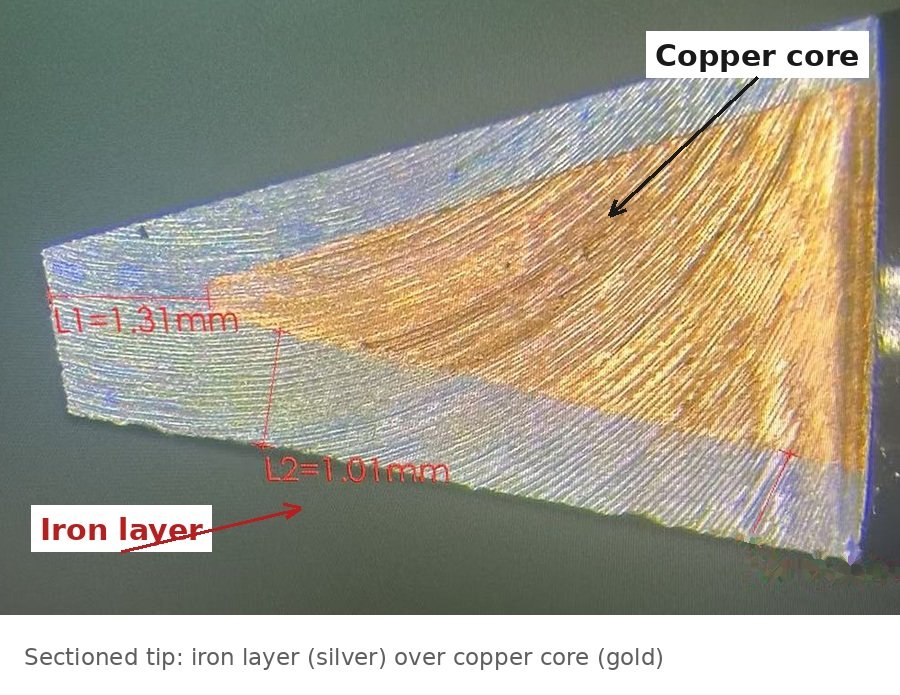
| Core material | High-purity oxygen-free copper (99.9%+) for the same thermal conductivity | Recycled / impure copper with slower, uneven heat recovery |
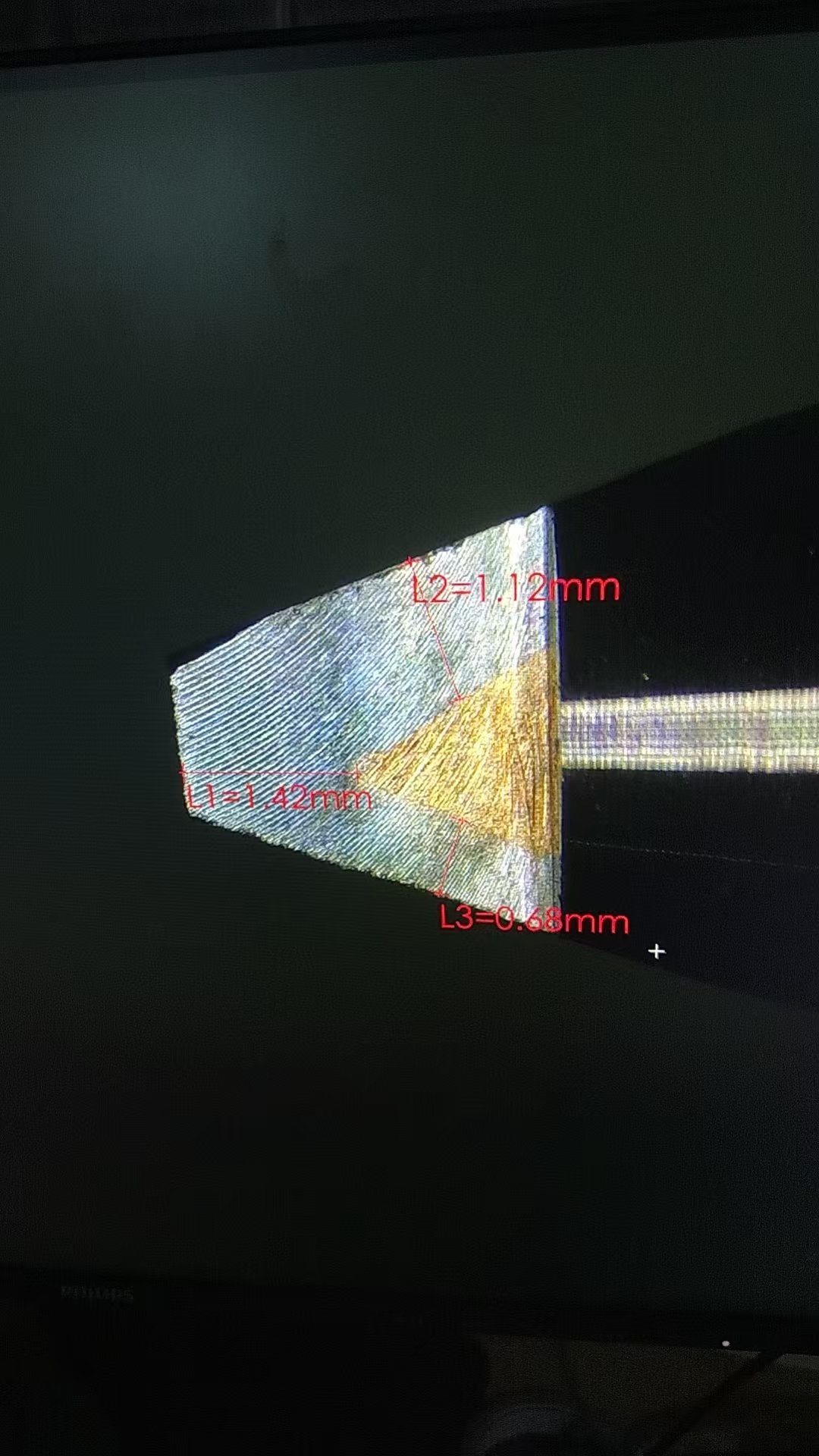
| Iron plating | Correct thickness for the duty (80–120 μm high-volume; 100–150 μm lead-free/high-temp), uniform across the working face | Thin, uneven plating (sometimes <10–20 μm) that erodes in days |
| Working profile | Geometry ground to the same V-groove, bevel or chisel profile the program was built around | Approximate profile → different solder volume, bridging or dry joints |
| Surface finish | Clean, pre-tinned, ready to wet out of the box | Rough, oxidized surface that fights the operator on day one |
| Batch consistency | Documented dimensional and plating checks, batch traceability | Excellent first sample, inconsistent reorders |
The takeaway: “compatible” is a category, not a quality level. The gap between a well-engineered compatible tip and a generic import is larger than the gap between a well-engineered compatible tip and the original.
The Engineer’s View: Will It Run My Process?
From a process-engineering standpoint, four questions decide whether a tip is production-worthy — regardless of whose logo is on it:
1. Does it seat and heat identically? A compatible tip worth using is a true drop-in: same thermal coupling, same temperature recovery, same approach geometry, so the existing robot program and solder profile carry over. If installing it means reprogramming positions or chasing temperatures, it has already failed. We hold critical seating and contact dimensions to ±0.01 mm for exactly this reason.
2. Does it hold the joint across the full service life — not just cycle one? The most common failure is a tip that wets beautifully when new and degrades fast as thin plating wears. Real-world performance is measured in consistent joints over thousands of cycles, which comes down to plating thickness and uniformity. See our iron plating thickness guide for the engineering detail.
3. Is the batch repeatable? A single great sample proves nothing on an automated line. What matters is that the 10,000th tip performs like the first. That requires automated plating, per-batch thickness control and dimensional inspection — not manual work that varies with the operator.
4. Can I get evidence? A production-grade supplier provides XRF plating reports, material specification and dimensional first-article data, and treats these as standard deliverables rather than favors. This is how a medical or automotive buyer can even consider a non-OEM part.
The practical engineering approach is never a leap of faith — it is a side-by-side first-article run: original versus candidate tip on the same machine, same program, same alloy, comparing wetting, joint quality over an extended cycle count, and wear. We actively recommend this test because it is the only claim anyone should trust.
The Buyer’s View: Total Cost, Supply Risk and Qualification
Purchasing sees a different set of variables, and unit price is only the first:
Cost per good joint — not cost per tip. The correct equation is (tip price + downtime cost) ÷ number of good joints produced. A tip costing 30% less that lasts half as long and causes changeover downtime is not a saving. A quality compatible tip that approaches original lifespan at a meaningfully lower price improves the metric that matters.
Single-source risk. Genuine consumables often arrive on 6–10 week import lead times with occasional allocation periods. A line that cannot stop is exposed when the only source of a consumable is overseas and back-ordered. A qualified second source is standard supply-chain practice in automotive and electronics manufacturing — the goal is rarely to eliminate the OEM, but to avoid being entirely dependent on it.
Inventory and cash. Lower unit cost and a responsive factory let buyers hold less safety stock of an expensive consumable and free working capital.
Qualification effort vs. reward. The one place originals stay cheap is qualification bureaucracy. Onboarding a new vendor costs engineering time, first-article runs and documentation. That effort only pays off on meaningful consumption — which is why high-volume V-groove, cross-bit and heavy-load tips are the natural first candidates, while low-use specialty cartridges may not justify switching at all.
How Close Is “Infinitely Close”? A Realistic Position
We set out to engineer tips that are as close to the original as metallurgy and machining allow, and our customers’ first-article data across Weller, Apollo Seiko, UNIX and TSUTSUMI lines show that a correctly matched compatible tip can reproduce seating, heat transfer, wetting and joint quality at a level the production process cannot distinguish — when it is made to the right specification.
We will also be candid about the limits:
- A compatible tip cannot be identical to an OEM part unless it is made by the OEM; we match the engineering specification, not the brand.
- On a brand-new machine model or a uniquely proprietary coating, availability or exact parity can lag.
- The outcome depends on the manufacturer, not the word “compatible.” Choose a supplier with the machining and plating capability, documentation discipline and willingness to be tested against the original.
That is why the right framing for most manufacturers is not “compatible or original” as an all-or-nothing decision. It is a dual-source strategy:
- Keep genuine OEM tips for new-process qualification, warranty-sensitive machines and change-control-critical stations.
- Qualify a documented, tested compatible source for your highest-consumption, validated, steady-state programs — where it lowers cost per joint and removes single-source supply risk.
This is precisely how our U.S. customers in automotive electronics, medical devices, consumer EMS and power electronics use our Weller, TSUTSUMI, UNIX and Apollo Seiko-compatible tips: not as a blind substitution, but as a qualified second source they have tested themselves.
How to Test Us Fairly
We would rather be measured than believed. If you operate any of these platforms:
- Send us your current part number, the machine model, and ideally a used-tip sample and the joint you run.
- We return a candidate matched in geometry, material and plating, with dimensional and plating data.
- Run it side-by-side against the original on the same program — wetting, joint quality over an extended cycle count, and wear.
- Qualify on the data, keep the OEM where you need it, and add us as a stable second source where the numbers work.
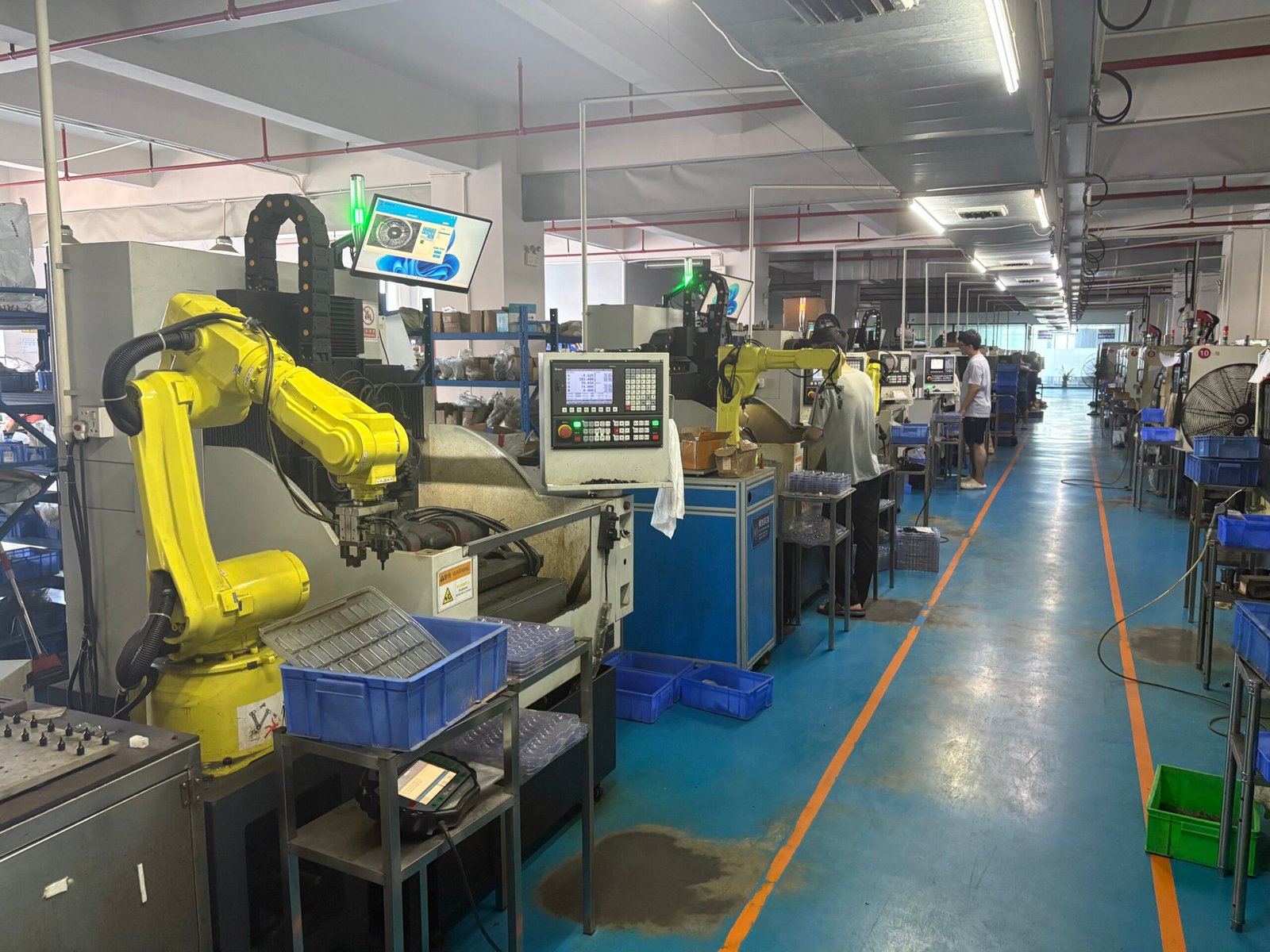
Our capability behind that offer: in-house CNC machining with ±0.01 mm precision, automated iron plating with per-batch XRF thickness verification, high-purity oxygen-free copper cores, 300,000+ pieces/month capacity, working prototypes in roughly two weeks, and full batch traceability. Read our guide to choosing a soldering tip supplier for automated production for the full qualification checklist.