
Why Does Solder Not Stick to a Soldering Tip? Causes and Solutions
Why Does Solder Not Stick to a Soldering Tip? Causes and Solutions
When solder does not stick to soldering tip, it creates a frustrating challenge for many soldering engineers and operators. The solder fails to melt properly or adhere to the tip surface, directly reducing soldering efficiency and increasing rework time. While some users assume the problem comes from the solder wire or soldering machine, the root causes are most often related to soldering tip oxidation, unstable temperature control, and improper soldering tip maintenance.
Understanding these causes helps manufacturers improve soldering quality and extend soldering tip lifespan.
1. Oxidation — The #1 Reason Solder Will Not Wet the Tip
The most common reason why solder does not stick to soldering tip is oxidation. During daily soldering operations, the flux in solder wire reacts chemically with the tip surface at high temperatures. Over time, an oxidation layer builds up that prevents fresh solder from wetting the tip.
Signs of a heavily oxidized tip include:
- Solder cannot wet the tip surface
- Solder melts slowly or forms irregular balls
- Heat transfer becomes significantly less efficient
- Solder joints become inconsistent and weak
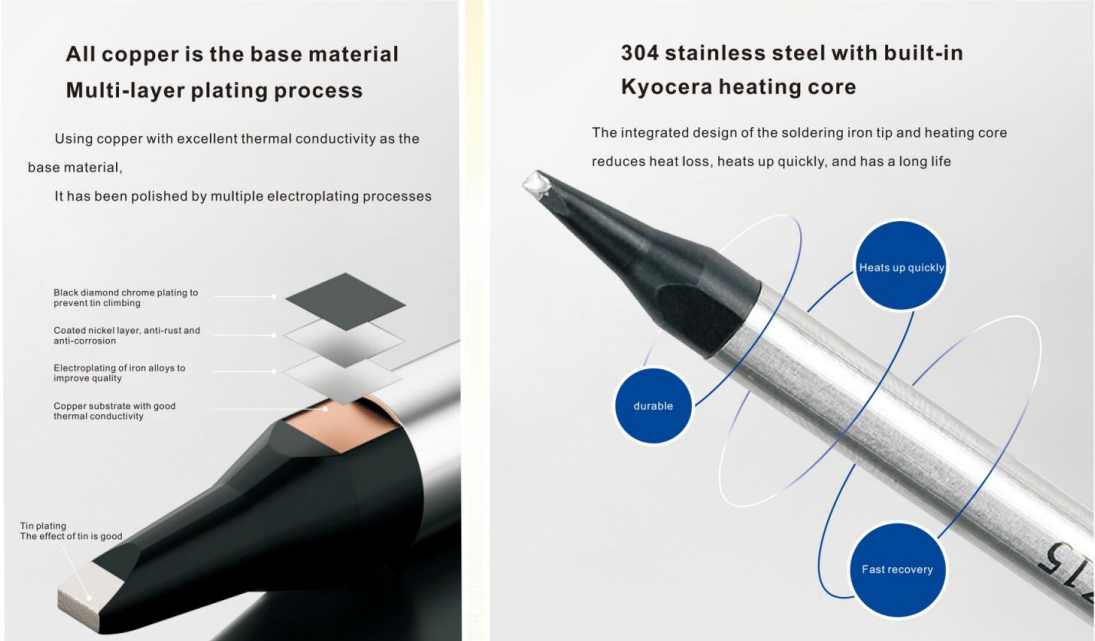
This problem is especially common in lead-free soldering, high-temperature industrial processes, and continuous production lines. Choosing high-quality compatible soldering tips with proper iron plating technology provides better oxidation resistance and longer service life.
2. Unstable Temperature Control Accelerates Tip Degradation
Another key factor behind soldering tip oxidation is unstable temperature control. When a soldering station cannot hold a consistent temperature, the tip experiences repeated heating and cooling cycles. This thermal cycling accelerates oxidation, increases solder melting time, and shortens overall soldering tip lifespan.
For industrial production, stable temperature performance is critical. A reliable soldering station with accurate temperature-controlled soldering not only improves joint quality but also protects the tip from excessive wear.
3. Poor Maintenance Reduces Tip Performance Quickly
Even premium industrial soldering tips degrade rapidly without proper care. Common mistakes include:
- Aggressive cleaning — rough methods damage the protective iron plating and shorten tip life
- Leaving the tip dry at high temperature — a dry exposed tip oxidizes within minutes
- Skipping regular oxidation removal — once oxidation becomes thick, solder cannot flow onto the tip surface
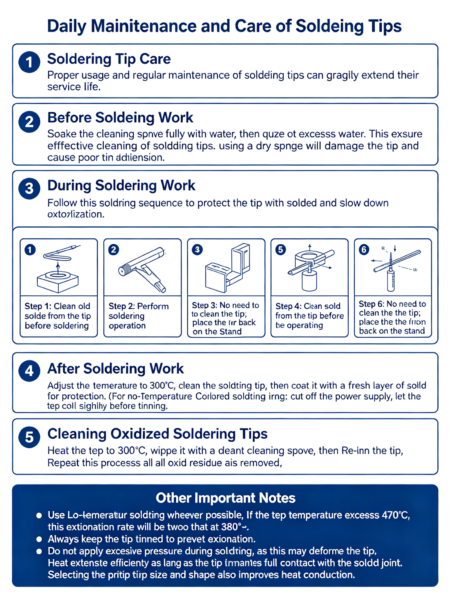
Proper soldering tip maintenance includes regular cleaning with a damp sponge or brass tip cleaner, tinning the tip before storage, and avoiding excessively high temperature settings.
4. How to Solve Wetting Problems — Two Practical Solutions
Solution 1: Clean Oxidation Regularly
During operation, soldering iron tip cleaning should be performed at regular intervals. Recommended practices:
- Remove oxidation before it becomes severe
- Keep a small amount of solder on the tip surface when not in use
- Avoid unnecessary high-temperature idle operation
These simple steps significantly improve performance when solder does not stick to soldering tip.
Solution 2: Use Accurate Temperature Control
Choosing a soldering station with stable temperature is important. Avoid operating at unnecessarily high temperatures — excessive heat accelerates oxidation, damages plating layers, and reduces tip lifespan. The correct temperature depends on the solder material, application requirements, and tip geometry.
5. Choosing the Right Tip Design Matters
Different applications require different tip designs to solve wetting issues:
- Precision electronics: C115 and C210 series — ideal for fine-pitch components and detailed rework
- <stro