
Copper vs Iron-Plated Soldering Tips: Which Material Lasts Longer?
Why Soldering Tip Material Matters
When choosing iron plated soldering tips vs pure copper tips, the material determines three critical factors: thermal conductivity, durability, and solder joint quality. The right choice can mean the difference between 5,000 and 50,000 solder joints per tip.
The two most common core materials are pure copper and iron-plated copper. Each has distinct advantages depending on your soldering application, frequency, and budget. Below is a detailed comparison to help you make the right choice for your production line.
Copper Soldering Tips: Maximum Heat Transfer
Pure copper tips offer the highest thermal conductivity among common tip materials — up to 401 W/m·K. This means heat reaches the solder joint faster, reducing cycle time in high-volume production environments.
- Best for: Lead-free soldering, large ground planes, heavy-gauge wires
- Thermal conductivity: Excellent (401 W/m·K)
- Typical lifespan: 5,000–10,000 joints (depending on solder type and temperature)
- Key advantage: Fastest heat recovery between joints
However, copper is soft and highly susceptible to corrosion. Without protective plating, copper tips oxidize rapidly at temperatures above 350°C, leading to “wet tip” failure where solder refuses to adhere. According to IPC standards, proper tip material selection directly impacts solder joint quality and long-term reliability.
Copper tips are widely used in wave soldering and selective soldering processes where tip geometry remains stable and replacement intervals are predictable.
Iron-Plated Soldering Tips: Built for Longevity
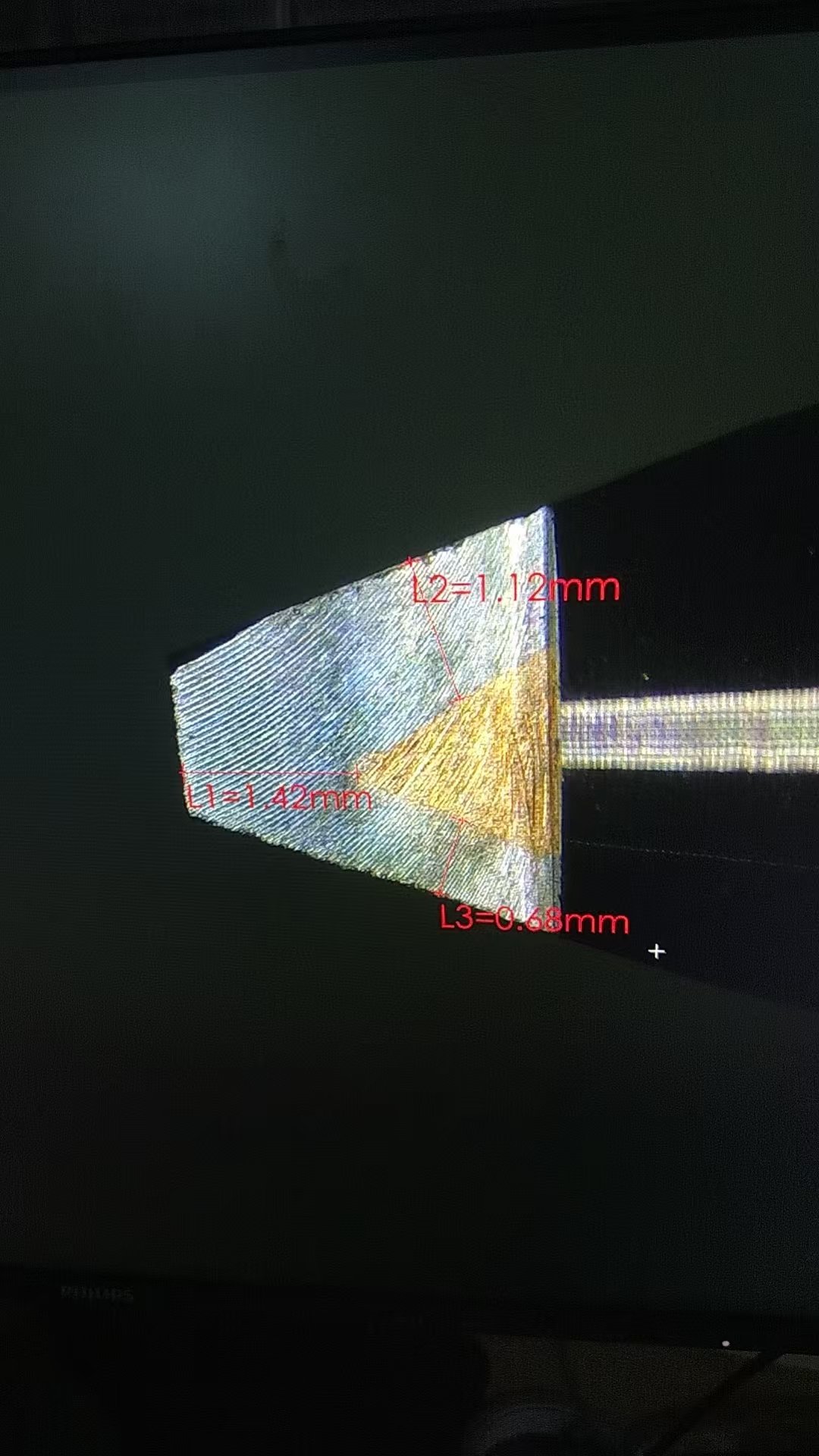
Iron-plated tips feature a copper core for good thermal conductivity, wrapped in a steel/iron alloy sleeve that protects against corrosion and mechanical wear. The iron layer acts as a barrier between the copper core and the solder alloy, significantly extending tip life.
- Best for: Automated soldering machines, high-volume SMD rework, lead-free processes
- Thermal conductivity: Good (80 W/m·K for iron layer, copper core compensates)
- Typical lifespan: 20,000–50,000 joints (3–5× longer than pure copper)
- Key advantage: Superior resistance to corrosion, flux erosion, and mechanical wear
The iron plating is especially critical when using aggressive no-clean fluxes or lead-free solder alloys (SAC305, Sn99.3Cu0.7), which are highly corrosive to bare copper. Most modern automatic soldering stations are designed specifically for iron-plated tips.
Quick Comparison Table
| Feature | Pure Copper Tip | Iron-Plated Tip |
|---|---|---|
| Thermal Conductivity | ★★★★★ | ★★★★☆ |
| Corrosion Resistance | ★★☆☆☆ | ★★★★★ |
| Lifespan | 5K–10K joints | 20K–50K joints |
| Cost per Tip | Lower ($2–$8) | Moderate ($5–$15) |
| Cost per Joint | Higher | Lower |
| Best Application | Manual, heavy thermal loads | Automated, high-volume production |
| Flux Compatibility | Mild fluxes only | All flux types including no-clean |
Not sure which tip fits your station? Check our complete compatible soldering tips guide to match the right tip to your JBC, Hakko, Weller, or Apollo station.
How to Choose the Right Material for Your Application
Choose pure copper tips when:
- You need maximum heat transfer for large thermal mass joints
- Your soldering temperature stays below 350°C
- You use mild rosin-based (RMA) fluxes
- Tip replacement is easy and frequent in your process
Choose iron-plated tips when:
- You run automated or semi-automated soldering lines
- You use lead-free solder alloys or aggressive no-clean fluxes
- Minimizing tip changeover frequency is a priority
- You need consistent solder quality over long production runs
OEM & Custom Soldering Tips from Zhongzhen
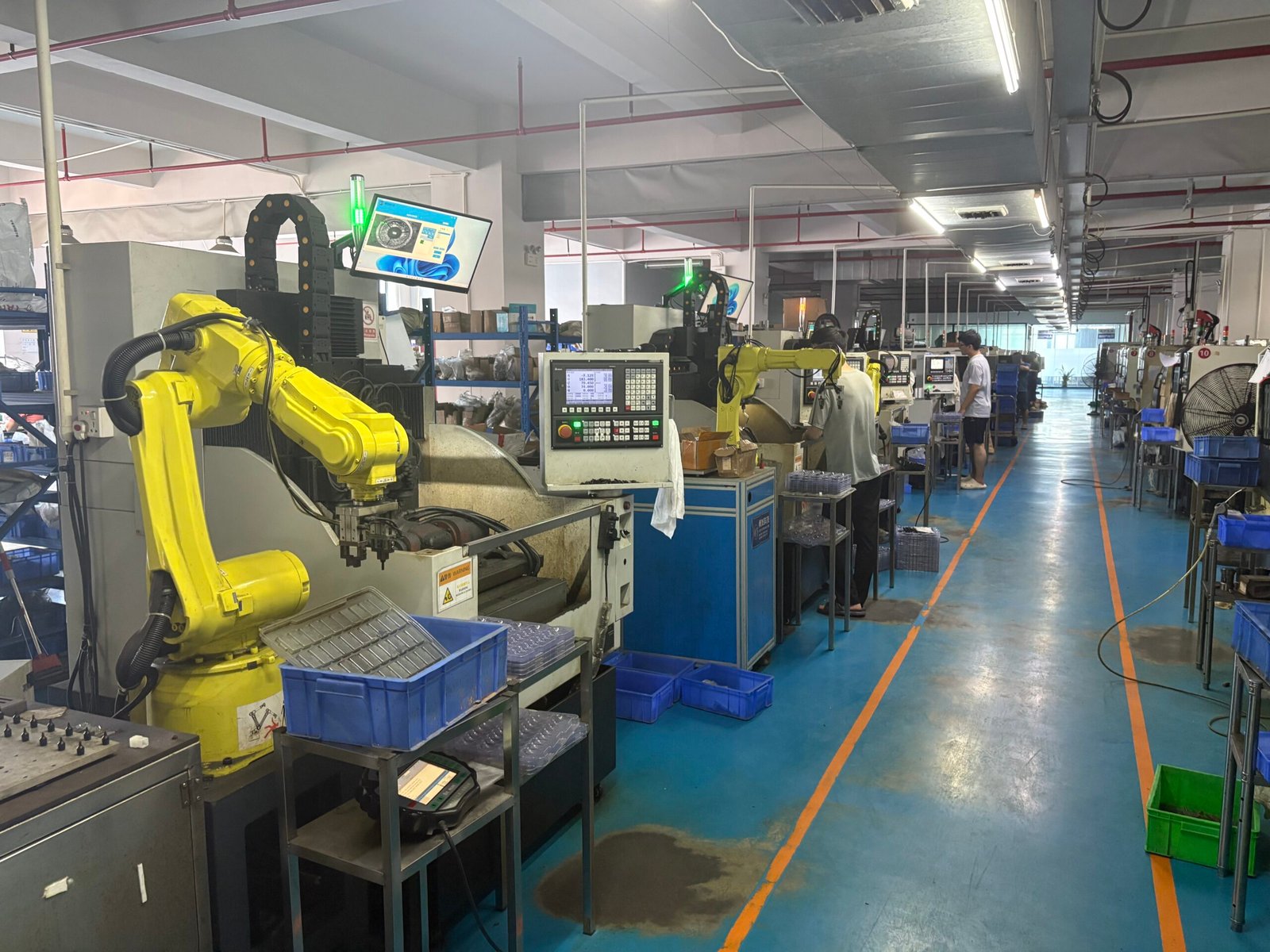
At Shenzhen Zhongzhen, we manufacture both copper-core and iron-plated soldering tips with full OEM/ODM capability. Whether you need standard replacement tips for JBC, Hakko, Weller, or Apollo stations, or custom geometries for your proprietary soldering process, we deliver factory-direct pricing with MOQ as low as 100 pieces.
Our tips undergo strict quality control including thermal cycling tests, salt spray corrosion tests, and dimensional accuracy checks to ±0.01mm tolerance.
Request a quote today: Email us at sunny@yinghualine.cn or WhatsApp +86 15012939635 for catalog, pricing, and samples.
Frequently Asked Questions
- Can I use a copper tip for lead-free soldering?
- Technically yes, but not recommended. Lead-free solder (especially SAC305) erodes copper tips 3–5× faster than tin-lead solder. Iron-plated tips are strongly preferred for lead-free processes to maintain tip life and solder quality.
- How do I know if my tip is iron-plated or pure copper?
- Look at the tip surface color. Iron-plated tips have a silver-gray metallic finish from the steel sleeve. Pure copper tips have a distinctive reddish-copper color at the working end. If the coating is worn through, you’ll see exposed copper underneath.
- Does tip material affect solder joint quality?
- Yes. Insufficient thermal conductivity (common with worn iron-plated tips) causes cold solder joints. Excessive oxidation (common with bare copper tips) prevents proper wetting. Both scenarios increase defect rates and rework costs.
- How does tip material affect tip blackening?
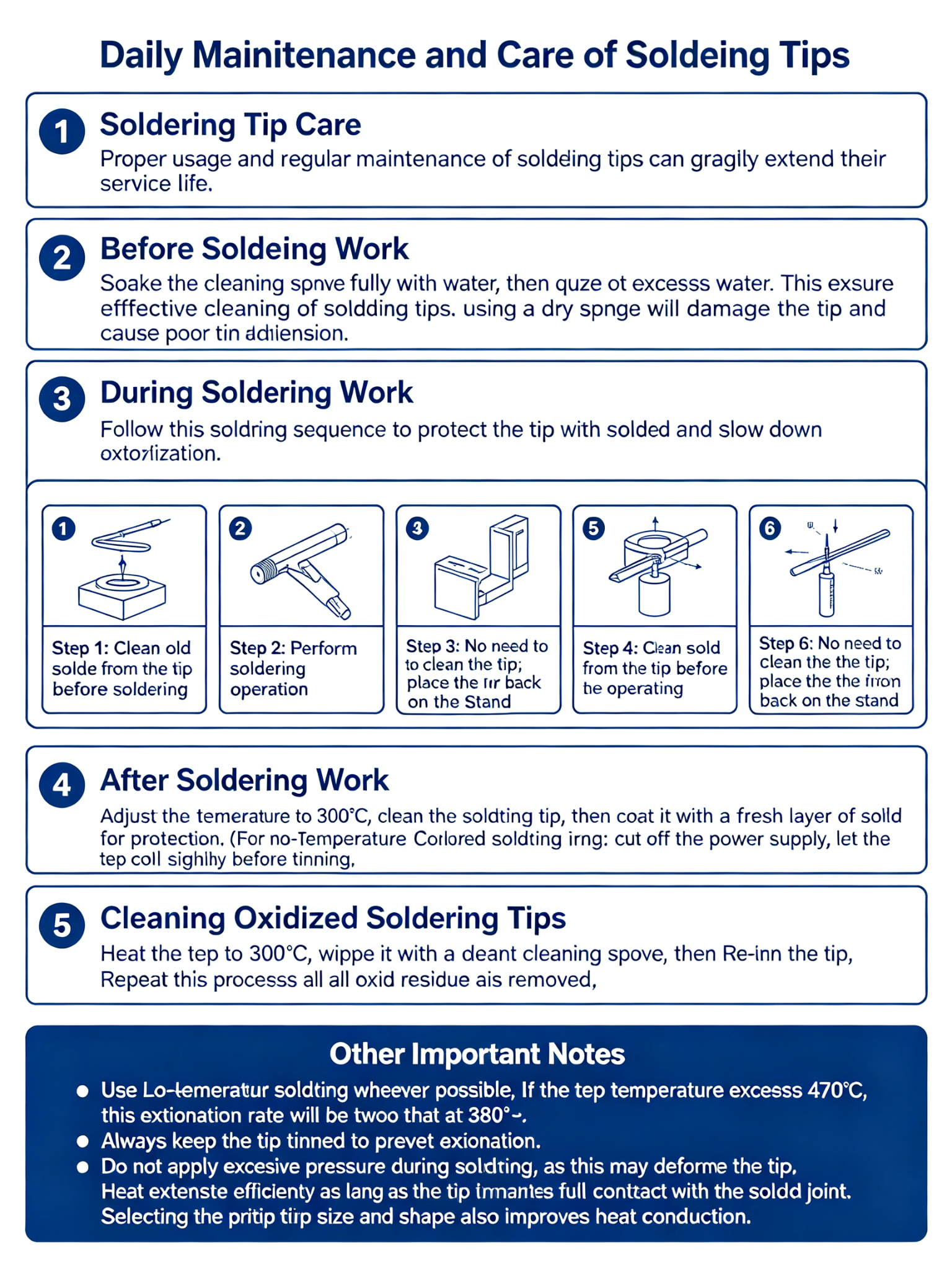
- Pure copper tips oxidize faster when exposed to air at high temperatures, leading to blackening. Iron-plated tips resist oxidation better, but if the iron layer wears through, the underlying copper core is exposed and blackens quickly. Learn more about the causes and solutions of soldering tip blackening.