
Why Does Soldering Iron Tip Turn Black? Causes and Solutions
Why Does Soldering Iron Tip Turn Black? Causes and Solutions
Introduction
A black soldering iron tip is one of the most common problems in electronics assembly and industrial soldering. Once the tip turns black, operators quickly notice:
- Poor solder wetting — solder won’t stick to the tip
- Weak heat transfer — longer heating time, lower efficiency
- Reduced soldering quality — cold joints and weak connections
But why does this happen? And more importantly — how do you fix it and prevent it from coming back?
1. Main Causes of a Black Soldering Iron Tip
1.1 Oxidation Due to High Temperature
When the iron runs at excessively high temperature, the iron plating on the tip oxidizes rapidly. This oxidation layer appears black and blocks direct contact between the tip and the solder.
1.2 Lack of Protective Tin Coating
The iron plating needs a thin layer of solder to protect it from air exposure. Without this protective tin layer, oxygen attacks the iron surface directly, causing black oxide buildup.
1.3 Improper Shutdown Procedure
Many users simply turn off the soldering iron without applying fresh solder to the tip. This leaves the bare iron surface exposed to air while the tip is still hot — accelerating oxidation overnight.
1.4 Flux Contamination
Aggressive or acidic flux residues can eat through the protective coating. Over time, this damages the iron plating and exposes the copper core underneath.
1.5 Low-Quality Tip Coating
Inferior plating processes cannot resist prolonged oxidation and chemical erosion. The iron layer is too thin or uneven, failing much faster than industrial-grade alternatives.
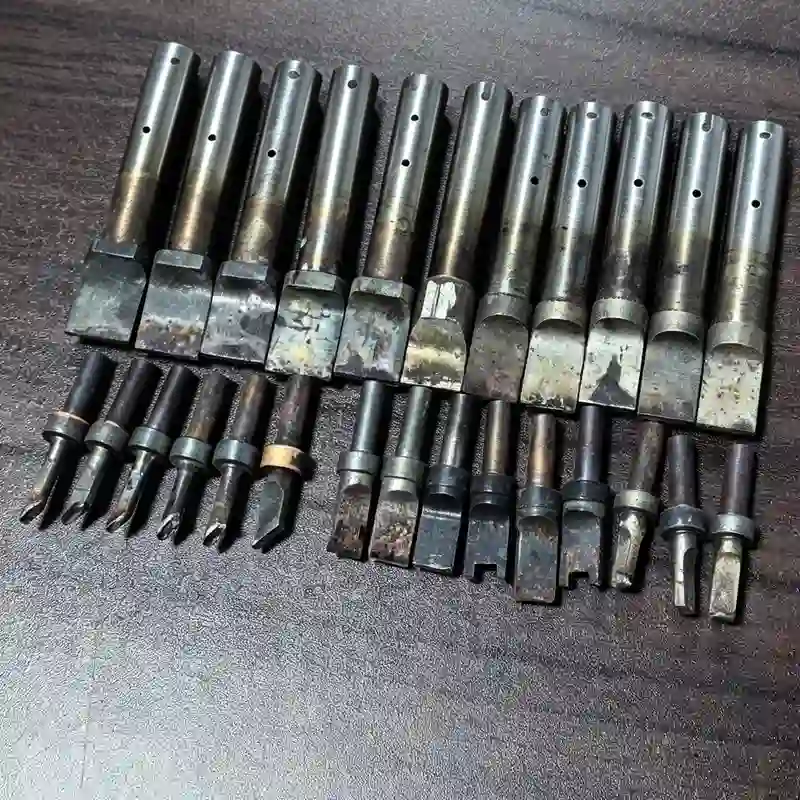
2. What Happens When the Tip Turns Black?
A blackened tip signals that serious damage has already begun:
- Oxidation layer formed — solder cannot wet the surface
- Heat transfer drops — more energy wasted, slower soldering
- Process instability — inconsistent joints, higher defect rate
In short: the tip becomes “inactive.” It can no longer transfer heat efficiently or form reliable solder joints.
3. How to Fix a Black Soldering Iron Tip
- Clean with brass sponge — gently remove the black oxide layer without damaging the iron plating
- Re-tin immediately — apply fresh solder right after cleaning to restore the protective layer
- Lower the temperature — reduce to the minimum temperature that still works for your solder alloy
- Avoid dry heating — never leave the iron on without solder or a damp sponge contact
4. Industrial Solutions: How Factories Prevent Black Tips
In production environments, tip blackening is controlled through engineering — not just cleaning:
- Oxidation-resistant coatings — advanced iron plating processes extend tip life significantly
- Precise plating thickness control — uniform coating resists thermal stress and chemical attack
- Optimized temperature profiles — matching power output to application avoids unnecessary overheating
- Application-specific tip geometry — the right shape improves heat balance and reduces hot spots
5. When the Problem Keeps Coming Back
If your tips keep turning black quickly — even after proper cleaning and maintenance — the issue is usually not the process. It’s the tip itself:
- Wrong tip selection for your application
- Poor plating quality from the supplier
- Incompatible tip geometry for your equipment
At this point, upgrading to industrial-grade custom tips becomes the most effective solution.
6. FAQ
Q: Can I scrape off the black layer with sandpaper?
No. Scraping removes the iron plating entirely and exposes the copper core. The tip will fail much faster. Use a brass sponge instead.
Q: Why does my tip turn black overnight?
Because the iron was turned off without tinning. Always apply a fresh layer of solder before shutting down — this protects the tip from oxidation during storage.
Q: Does tip blackening happen with all soldering irons?
Yes, but the speed varies. Low-quality tips can blacken within days. Industrial-grade tips with proper coating can last months or years under the same conditions.
Q: How do I know if the tip is beyond repair?
If re-tinning doesn’t restore wetting after cleaning, the iron plating is likely damaged beyond recovery. It’s time to replace the tip.
Need Industrial-Grade Soldering Tips?
We design and manufacture soldering tips built to resist oxidation and extend production line life:
- High oxidation-resistant iron plating
- Custom geometry matched to your equipment
- High-power compatible tips (up to 1kW systems)
- Long-life industrial-grade options for 24/7 production
Send us your application details — we’ll evaluate the best tip solution for your process.